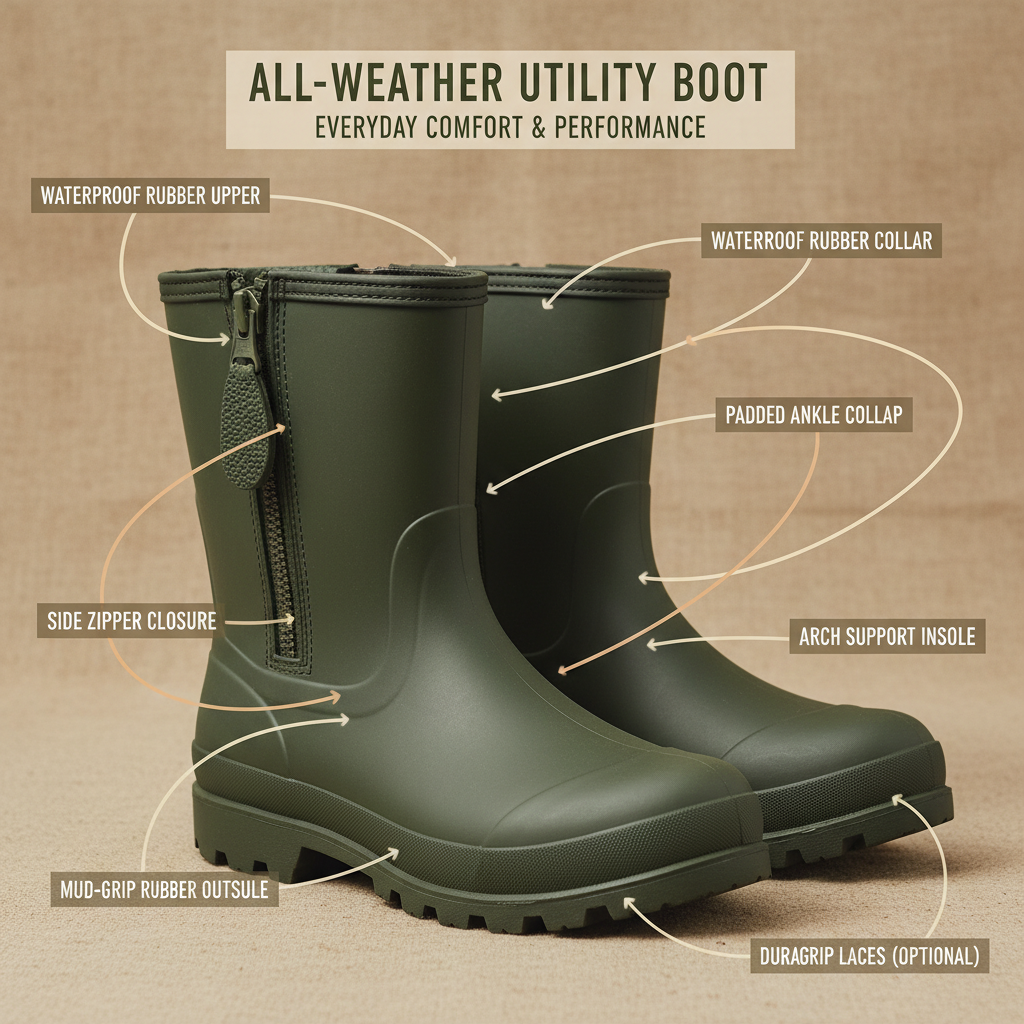
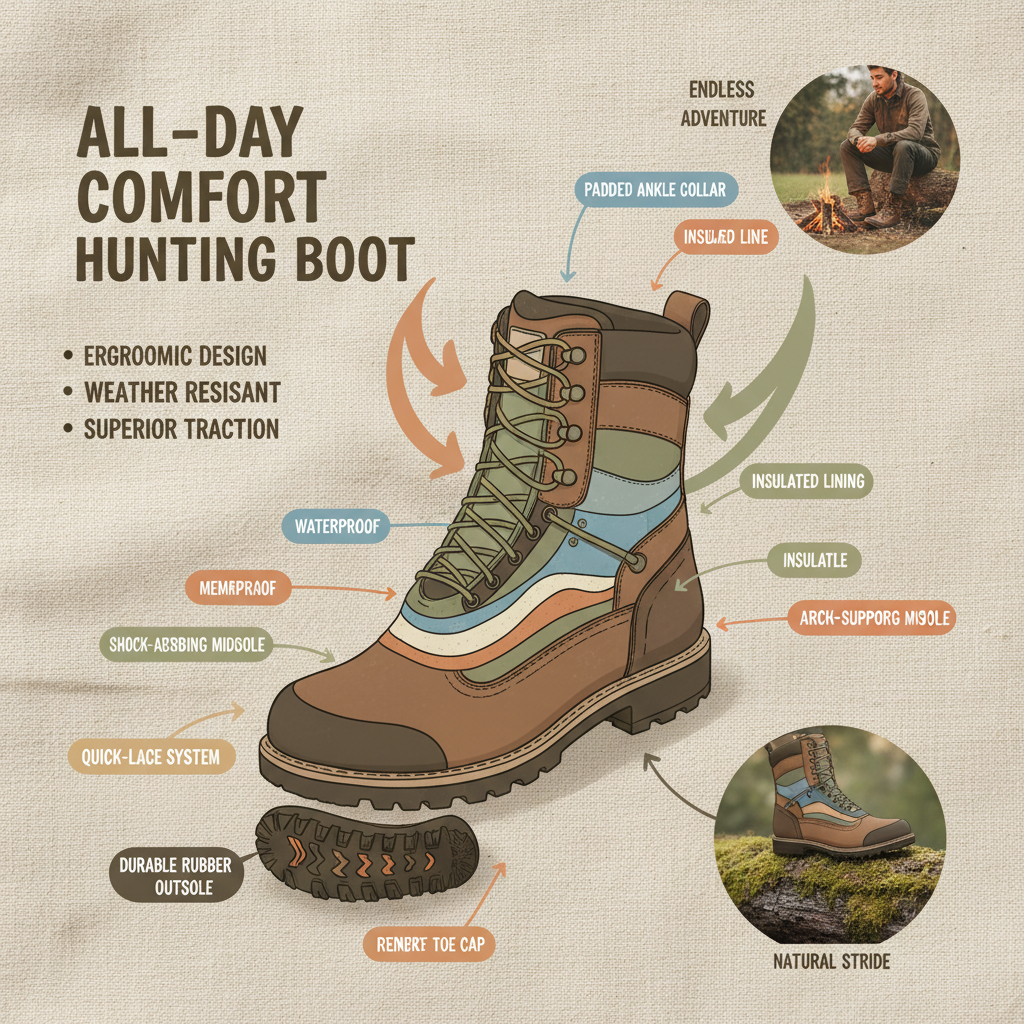
Finding the perfect fit for outdoor gear can be a significant challenge for many outdoorsmen, particularly when it comes to footwear that accommodates muscular calves or thick thermal layers. extra wide calf hunting boots provide a critical solution, ensuring that hunters and field workers are not forced to compromise between comfort and protection. By expanding the shaft circumference, these specialized boots eliminate the restrictive pressure that often leads to circulation issues and fatigue during long treks.
Globally, the demand for inclusive sizing in performance footwear has surged as outdoor activities become more accessible to diverse body types. Whether navigating the dense brush of North American forests or the wetlands of Southeast Asia, the ability to wear gear that fits properly is not just a matter of luxury, but a matter of safety and endurance. Standard boots often fail to meet the anatomical needs of a significant portion of the population, leading to blisters, chafing, and reduced mobility.
Understanding the engineering behind extra wide calf hunting boots allows users to make informed decisions about their gear. From the choice of flexible neoprene to the integration of adjustable closure systems, these boots are designed to provide a secure seal against water and debris while remaining accommodating. This guide explores the industry standards, practical applications, and future innovations that make wide-calf options essential for the modern adventurer.
The Global Necessity of Extra Wide Calf Hunting Boots
The global outdoor footwear market has seen a paradigm shift toward inclusivity, recognizing that "standard" sizes often exclude a large percentage of the active population. For those with larger calf muscles or those who require heavy insulating socks in sub-zero climates, extra wide calf hunting boots are no longer a niche product but a fundamental requirement for field safety. Statistics from ergonomic studies suggest that improperly fitting footwear can increase the risk of lower-limb fatigue by up to 30%, highlighting the importance of a proper shaft diameter.
In regions where hunting and fishing are primary economic activities or cultural traditions, the reliance on durable, well-fitting gear is absolute. The challenge has long been the trade-off between a wide opening for ease of entry and a secure fit that prevents water ingress. Modern manufacturing has solved this by implementing tiered sizing and flexible materials, ensuring that the boot remains stable on the leg without restricting blood flow or causing discomfort during steep ascents.
Defining the Ergonomics of Wide Calf Footwear
At its core, extra wide calf hunting boots are defined by an increased circumference in the upper shaft, specifically designed to accommodate the gastrocnemius and soleus muscles of the lower leg. Unlike standard boots, which follow a rigid taper, wide-calf versions utilize a modified last and expanded patterns to provide several additional centimeters of space. This design philosophy focuses on "dynamic fit," meaning the boot can accommodate the natural expansion of the calf muscle during physical exertion.
From an industrial perspective, this involves a complex intersection of material science and anatomical mapping. The goal is to maintain the structural integrity of the boot—preventing it from slouching or folding—while providing a generous internal volume. This is particularly crucial for rubber and neoprene boots, where the material lacks the inherent breathability of leather, making any tight spot a potential area for friction-induced blisters.
Beyond the physical dimensions, these boots address a humanitarian need for accessibility in professional outdoor roles. Whether it is a game warden, a professional guide, or a conservationist, the ability to perform duties without the pain of restrictive gear is essential for mental focus and physical longevity. By prioritizing the user's anatomy over a generic size chart, the industry is moving toward a more human-centric approach to safety equipment.
Core Components of High-Performance Wide Shaft Boots
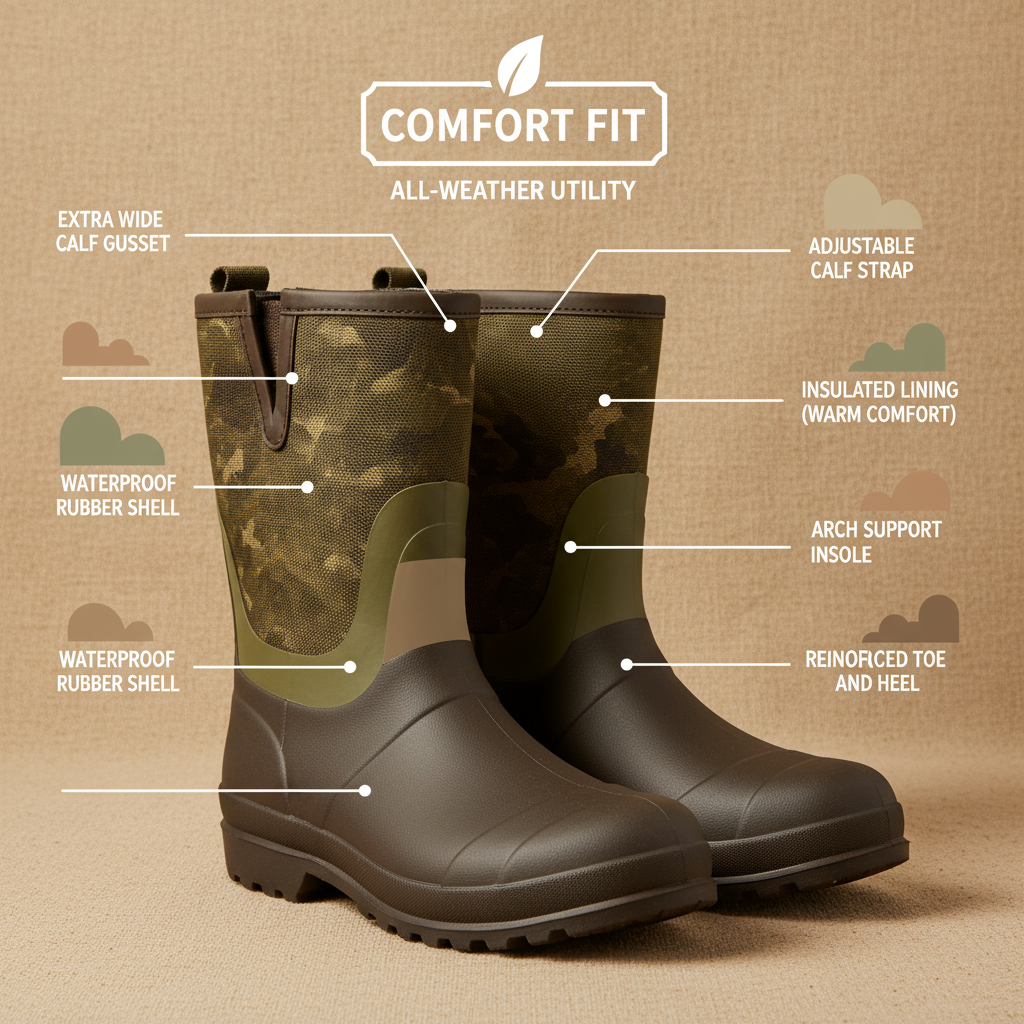
Durability is the first pillar of extra wide calf hunting boots. Because the shaft is wider, there is a greater surface area exposed to abrasive elements like thorns, rocks, and thick brush. To counter this, manufacturers employ high-denier nylon or reinforced vulcanized rubber that resists punctures while remaining flexible enough to move with the wearer's stride.
Scalability and adjustability are integrated through advanced closure systems. Many premium extra wide calf hunting boots feature adjustable straps, drawstring toggles, or elasticated gussets. These components allow the user to customize the tightness of the boot, ensuring a snug fit around the top to keep out debris while maintaining a spacious interior for the calf.
Thermal regulation and moisture management are equally vital. A wider shaft can sometimes lead to a "chimney effect" where heat escapes too quickly or water enters more easily. To solve this, designers use multi-layered neoprene linings that provide insulation and a snug, comfortable feel against the skin, effectively sealing the leg regardless of the boot's external width.
Practical Performance Metrics and Comparison
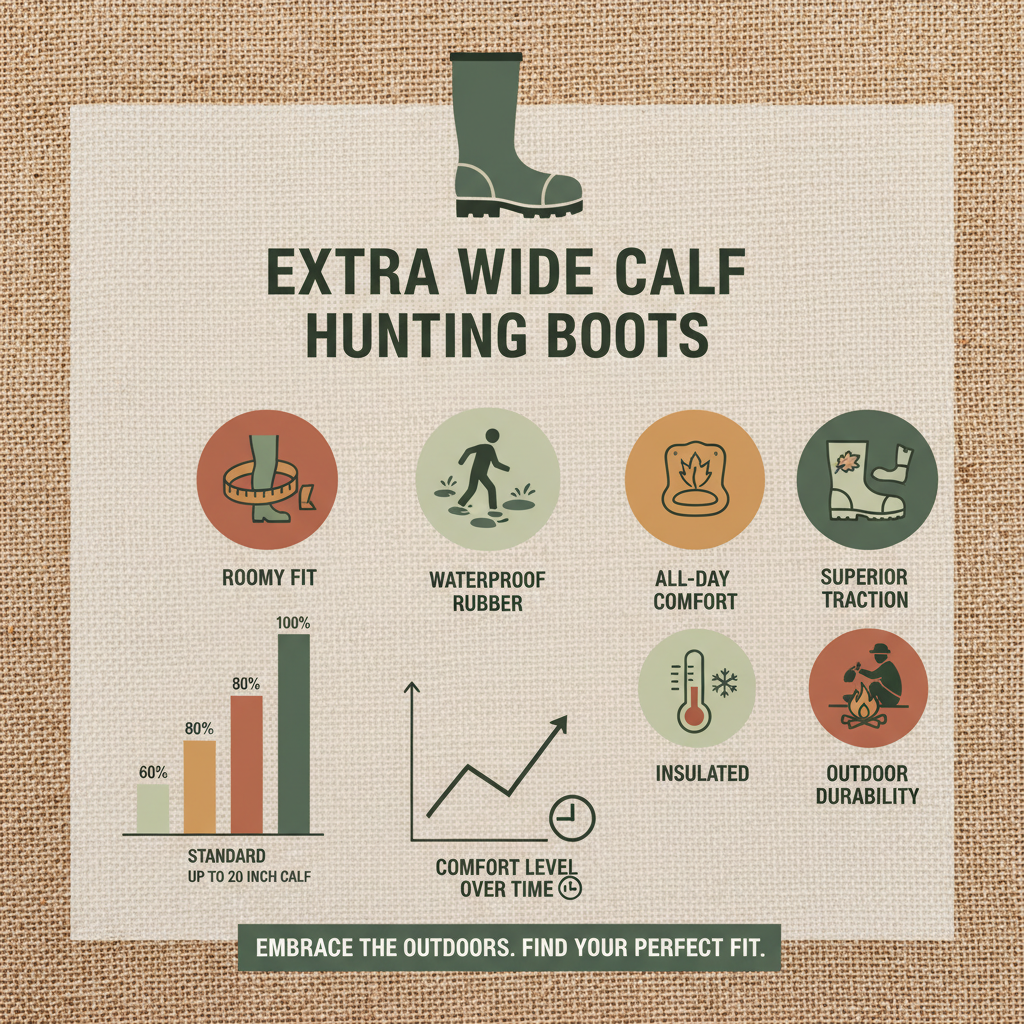
When evaluating the effectiveness of extra wide calf hunting boots, it is essential to look at how they perform across different technical criteria. The balance between "Ease of Entry" and "Secure Fit" is the primary metric of success. A boot that is too wide may slip, while one that is too narrow causes fatigue.
By analyzing various design approaches—such as fully adjustable neoprene versus fixed-width reinforced rubber—we can see a clear trend toward hybrid models that offer the best of both worlds. The following data represents the performance ratings of various wide-calf construction methods based on user endurance and comfort tests.
Performance Ratings of Wide Calf Boot Designs
Global Applications in Diverse Terrains
The application of extra wide calf hunting boots spans various global environments. In the marshlands of the Southern United States or the river deltas of South America, these boots are indispensable for hunters who must navigate deep mud and water while wearing thick protective gear. The added width allows for the layering of thermal socks and calf protectors without restricting movement.
Beyond recreation, these boots are utilized in remote industrial zones, such as oil rigs or forestry sites, where workers often have muscular builds and operate in harsh conditions. In these professional contexts, the reliability of a wide-calf boot reduces the likelihood of workplace injuries caused by circulation restriction or foot fatigue, proving that ergonomic design has a direct impact on industrial productivity and worker safety.
Long-Term Value and User Well-being
Investing in extra wide calf hunting boots offers tangible long-term benefits that extend beyond a single hunting season. From a physiological standpoint, reducing pressure on the lower leg prevents venous insufficiency and chronic swelling during extended periods of standing or walking. This investment in comfort translates directly into increased endurance, allowing the user to push further into the wilderness with confidence.
Emotionally, the shift toward inclusive sizing provides a sense of dignity and trust. For too long, individuals with larger calves had to "settle" for boots that were marginally too tight or lacked necessary features. By providing a product specifically engineered for their needs, brands build deep loyalty and trust, shifting the relationship from a mere transaction to a partnership in the user's outdoor success.
Furthermore, the sustainability of high-quality wide-calf boots is a key logical advantage. When a boot fits perfectly, it experiences less localized stress and wear, significantly extending the product's lifespan. This reduces the frequency of replacements, lowering the environmental impact of manufacturing and waste, while providing the user with a reliable piece of equipment for years to come.
Future Innovations in Adaptive Boot Manufacturing
The future of extra wide calf hunting boots lies in "Smart Adaptation." We are seeing the emergence of 3D-knitted materials and memory-foam inserts that can mold to the specific contours of a user's calf. This transition from "extra wide" to "custom fit" will be driven by digital scanning technologies, allowing users to upload their leg measurements to receive a boot tailored to their exact anatomy.
Sustainability is also driving innovation. The integration of bio-based rubbers and recycled ocean plastics into the wide-shaft design ensures that performance does not come at the cost of the planet. Future boots will likely feature modular components, where the calf section can be replaced or adjusted independently of the sole, further increasing the longevity and versatility of the footwear.
Automation in the manufacturing process is also allowing for "micro-sizing," where boots are available in half-centimeter increments of calf circumference. This precision engineering ensures that the seal remains waterproof without the need for overly tight closures, representing the pinnacle of the marriage between industrial efficiency and human comfort.
Comparative Analysis of Wide Calf Boot Material Innovations
| Material Type |
Flexibility Score (1-10) |
Waterproof Rating |
Durability Level |
| Vulcanized Rubber |
6 |
Excellent |
Very High |
| Premium Neoprene |
9 |
Very Good |
Medium |
| Hybrid Synthetic |
8 |
Good |
High |
| Waterproof Leather |
5 |
Good |
Extreme |
| Bio-Polymer Rubber |
7 |
Excellent |
High |
| 3D-Knit Mesh |
10 |
Fair (Treated) |
Medium |
FAQS
To get the most accurate measurement, use a soft measuring tape around the widest part of your calf while wearing the socks you intend to use in the field. Measure both legs, as they are often slightly different, and use the larger measurement as your guide. For the best fit in extra wide calf hunting boots, we recommend adding a small margin of ease (about 0.5 to 1 inch) to ensure the boot doesn't restrict blood flow during activity.
Yes, absolutely. High-quality extra wide calf hunting boots utilize a combination of an expanded shaft and adjustable closures (like neoprene collars or drawstrings) to create a seal. The waterproof integrity is maintained by the materials themselves—such as vulcanized rubber—while the adjustable top ensures that water and debris cannot enter from the top regardless of the width.
The "extra wide" designation refers specifically to the calf circumference, not the ankle or the footbed. The structural support around the ankle and the stability of the sole remain identical to standard professional hunting boots. You still receive the same high-level lateral stability and arch support, ensuring your ankles are protected during uneven terrain traversal.
They are actually superior for cold weather. Because extra wide calf hunting boots allow for thicker insulating socks and thermal leggings without compressing them, they help maintain better circulation. Compression in cold weather can actually lead to faster cooling of the extremities, so the extra space is a significant advantage for warmth.
Slouching usually occurs when the material is too thin or the boot is significantly oversized. To prevent this, look for boots with reinforced rubber walls or structured neoprene. Additionally, using the integrated adjustment straps or wearing them with appropriate calf-height socks provides the necessary internal tension to keep the boot upright and professional in appearance.
Yes, these boots are highly versatile. The same features that make extra wide calf hunting boots great for the woods—durability, waterproofness, and inclusive fit—make them excellent for agricultural work, forestry, and industrial site inspections. Just ensure you choose a sole pattern that matches the specific grip requirements of your work environment.
Conclusion
The evolution of extra wide calf hunting boots represents a critical intersection of ergonomic science and outdoor performance. By addressing the often-overlooked need for inclusive sizing, these boots eliminate the physical barriers that hinder endurance and comfort in the field. From the use of advanced neoprene to the implementation of adaptive closure systems, the focus has shifted from a "one size fits most" mentality to a precision-fit approach that prioritizes the user's health and efficiency.
As we look toward the future, the integration of 3D scanning and sustainable, bio-based materials will further refine the wide-calf experience, making professional-grade gear accessible to every body type. We encourage all outdoorsmen and professionals to prioritize fit over brand prestige; the right boot is not just an accessory, but a fundamental tool for safety and success in the wilderness. For those seeking the perfect balance of space and protection, we invite you to explore our specialized range. Visit our website: www.landwalk-outdoor.com