



Oct . 16, 2025 14:35
Back to list
Lightweight Rain Boots Women's | Waterproof & Non-Slip
Ladies Lightweight Thermal Rain Boots SY011C018H-3N: An Insider’s Field Notes
There’s a quiet shift happening in wet-weather footwear: more warmth, less weight, fewer compromises. I’ve spent a good chunk of this year talking with store buyers and factory techs, and the model that kept popping up was lightweight rain boots women's—specifically, the SY011C018H-3N by Landwalk. To be honest, the name’s a mouthful, but the pitch is simple: thermal lining, grippy outsole, almost featherlight feel.
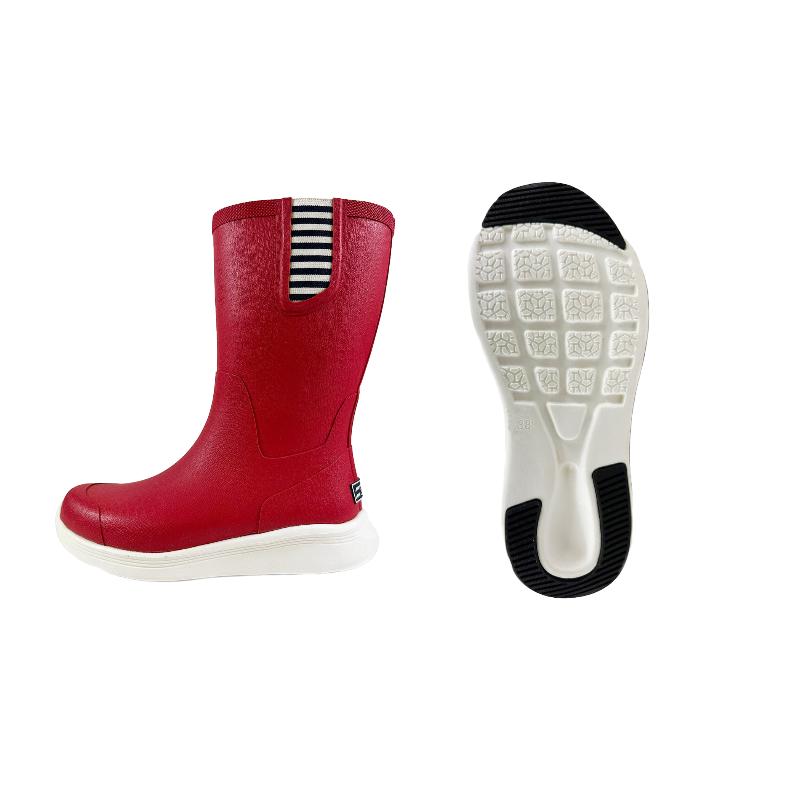
Industry trends (and why weight suddenly matters)
Actually, “lightweight” is more than a buzzword—it’s the trickle-down from athleisure into utility boots. EVA-based compounds, foamed midsoles, and thermal liners are replacing older, dense rubber formulas. Many customers say they won’t tolerate “leg fatigue” anymore, even on farm or festival days. It seems that thermal liners plus SRA-rated slip resistance are now table stakes, not perks.
Technical specs at a glance
| Product Name | Ladies Lightweight Thermal Rain Boots SY011C018H-3N |
| Upper / Outsole | EVA or EVA-blend upper; TPR outsole (injection-molded) |
| Insulation | Removable thermal lining (fleece-like), ≈3–5 mm |
| Weight | ≈ 420–600 g per boot (size-dependent; real-world use may vary) |
| Slip Resistance | SRA-rated outsole pattern; oil-resistant TPR compound |
| Waterproofing | Seamless injection shell; ISO 20344 water penetration test: Pass |
| Temp Range | ≈ -10°C to +15°C comfort window with liner |
| Sizes / Colors | EU 36–41 (common); custom colors & patterns on request |
| Compliance | REACH, CA Prop 65 guidance, EN ISO 20347 (parts applicable) |
Process flow and testing (the nerdy part)
- Materials: EVA/EVA-blend pellets; TPR outsole; removable thermal liner; fabric pull tabs.
- Methods: Injection molding shell → outsole bonding/mold-in → liner fitment → trimming → QC.
- Tests: ISO 20344 water penetration; SATRA TM77 flexing (≥100k cycles target); ASTM D1790 cold crack (tested around -20°C); SRA slip on ceramic + detergent.
- Service life: around 2–4 wet seasons with typical urban/garden use; harsher work sites vary.
- Industries: gardening, outdoor retail, hospitality back-of-house, light ag, festivals.
Where these boots make sense
For commuting in drizzle, weekend market runs, or muddy allotments, lightweight rain boots women's designs like the SY011C018H-3N punch above their class. The liner helps on cold mornings; the SRA outsole sticks on tiled entries (I’ve skidded enough times to care).
Vendor snapshot (real-world buying concerns)
| Vendor | Material & Weight | Insulation | Customization | Lead Time |
| Landwalk SY011C018H-3N | EVA/TPR; ≈ very light | Removable liner | Colors, logo, carton, sizes | ≈ 30–45 days after PO |
| Premium Heritage Brand | Natural rubber; medium weight | Often uninsulated | Limited (seasonal) | Varies; seasonal drops |
| Generic Marketplace | Mix; quality varies | Inconsistent | Minimal | Fast ship but QC risk |
Customization and purchasing notes
OEM/ODM is on the table—brand prints, colorways, and box design. MOQs depend on colors and size runs. For retail chains, ask for material declarations (REACH/Prop 65) and SRA test reports up front. Small detail, big headache saver.
Mini case files
- Seattle boutique: switched to lightweight rain boots women's with thermal liners; sell-through up 18% in October rains, fewer returns for “heavy feel.”
- Netherlands garden co-op: field staff reported better all-day comfort and fewer slips on wet paving; liners laundered weekly without pilling (surprisingly resilient).
Factory origin for the SY011C018H-3N is listed as: Room 9-1, Zone F, 3rd Floor, Building D, Science and Technology Industrial Park, No. 723 Cuiyuan Street, Baoding City, Hebei Province.
Bottom line
If you need warm-feel, low-weight boots that still tick the compliance boxes, this model is a pragmatic pick. Not flashy, just thoughtfully engineered for wet months—and your calves will thank you.
Authoritative references
- ISO 20344: Personal protective equipment — Test methods for footwear. https://www.iso.org/standard/36511.html
- EN ISO 20347: Occupational footwear (SRA/SRB/SRC slip). https://www.iso.org/standard/76480.html
- REACH Regulation (EC) No 1907/2006. https://echa.europa.eu/regulations/reach
- ASTM D1790: Standard Test Method for Brittleness Temperature of Plastics. https://www.astm.org/d1790
- SATRA TM77 Flexing resistance of footwear soles. https://www.satra.com/
Latest news
-
Ultimate Guide to Choosing the Best Farmers Wellington BootsNewsApr.16,2026
-
The Ultimate Guide to Choosing the Best Professional Farming WelliesNewsApr.09,2026
-
Comprehensive Guide to Choosing the Perfect Field Wellies for Outdoor AdventuresNewsApr.07,2026
-
Choosing the Right Fit for Good Quality Wellies and Outdoor AdventuresNewsApr.04,2026
-
Choosing the Right Fit A Comprehensive Guide to Good Wellies and Outdoor FootwearNewsMar.31,2026
-
Choosing the Right Footwear A Comprehensive Guide to Good Wellington BootsNewsMar.28,2026
-
Choosing the Right Hard Wearing Wellies for Outdoor AdventuresNewsMar.26,2026